
You can see the first monsoon cells building over the San Francisco Peaks by mid-afternoon in late June. Wind picks up. Sky goes flat gray. Twenty minutes later water is hitting your house faster than the gutters can move it, and any weak spot on your roof is about to get tested.
Northern Arizona monsoon season runs from mid-June through mid-September. The roofs that come through it without leaks got walked in May or early June. The ones that leak in July almost always had a small problem somebody could have caught weeks earlier.
Want eyes on your roof before storm season? Call Polaris Roofing Systems at (928) 699-4840 or schedule a free pre-storm inspection. We document everything with dated photos so you have a baseline before the first cell rolls through.
Short Version If You’re Skimming
Check shingles for curling and granule loss, check the rubber boots at every plumbing vent for UV cracks, clear pine needles out of valleys and gutters, look in the attic with a flashlight for water staining on the deck, and document everything with photos.
Pre-storm fixes cost a few hundred dollars. The same issues caught in August after the first storm typically run thousands.
Why Late May or Early June Is the Sweet Spot
The window between the end of winter weather and the start of monsoon is short up here. By the second week of June, the first cells start firing.
A small lifted shingle in May is a hundred dollar repair on a clear day. The same shingle, hit by a 65 mph gust in the first July cell, pulls adjacent shingles loose and exposes the underlayment. Two storms later, water is on the deck and showing as a ceiling stain.
Same starting problem. Five to ten times the eventual cost.
There’s also the insurance angle. Photos of your roof from before monsoon season give you a clean before-and-after. Without that baseline, claims often get partially denied as long-standing wear.
The Stuff We Look At, Slope by Slope
Shingles
South and west-facing slopes go first because UV at 7,000 feet is brutal between monsoon seasons. We look for curling at edges, cupping in the middle, missing shingles, dark patches where granules have worn off, and any shingles that look lifted.
Granules show up in your gutters too. If a handful looks like dark sand and there’s a meaningful volume, your shingles are aging faster than they should.
Flashing and Penetrations
Anywhere something pokes through the roof is a potential leak. Chimneys, skylights, plumbing vents, bath and kitchen exhaust, HVAC penetrations. We check sealant for cracks, metal flashing for lifted edges, and the rubber boot collars at plumbing vent pipes for UV cracking.
That last one is the single most common finding on otherwise healthy Flagstaff roofs.
Valleys, Gutters, and Drainage
Valleys handle the most water per square foot during monsoons. If you have ponderosas on your lot, expect needle buildup. Three to four inches deep is common by June on heavily wooded lots in Forest Highlands or Country Club Estates.
Clean gutters and confirm downspouts discharge well away from the foundation. A blocked downspout overflows behind the gutter, soaks the fascia, and leads to fascia replacement after two weeks of monsoon storms.
Attic and Ceilings
Climb into the attic with a flashlight and look at the underside of the deck for water staining, daylight, rusted nails, and the general condition of the insulation. Confirm bath fans and dryer vents actually exhaust outside through ducts, not into the attic.
Walk every ceiling in the house and note any rings, brown stains, or fresh paint that might be covering old stains. Small ceiling marks point at slow leaks that monsoon water volume will turn into fast leaks.
The Number One Thing We Find, By a Wide Margin
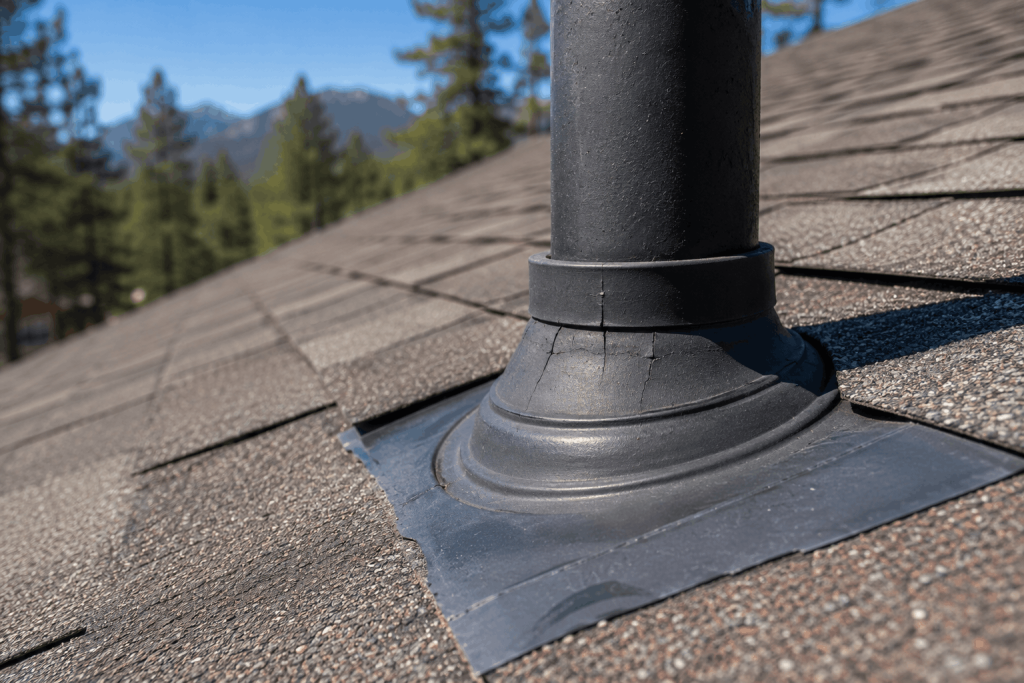
Cracked rubber boots at plumbing vents. That single finding represents 35 to 40 percent of all the issues we flag on pre-monsoon inspections.
The rubber degrades from UV exposure, usually opening a crack at the top edge between year 8 and year 12 of the roof’s life. Water passes through it slowly during light rain. Then monsoon hits, water sheets across the boot, and the same crack lets in a hundred times the volume.
Replacement boots run $200 to $350 installed. Compared to what a chronic ignored vent boot can do to a ceiling, it’s the easiest preventive repair in roofing.
When It’s Already Too Late to Catch the Problem Cheap
If your check turns up any of the following, do not wait through monsoon to address it:
- Water stains on interior ceilings, even small ones
- Soft or spongy spots in the attic deck
- Missing or clearly lifted shingles
- Cracked vent boots that you can see have separated
- Heavy granule loss with the underlying mat showing through
- Any roof over fifteen years old that has not been inspected recently
If you’ve got an active leak, the order of operations is tarp first, then inspect. Our walkthrough on handling roofing emergencies covers the first 48 hours.
For broader monsoon context, our piece on how monsoon storms affect Northern Arizona roofs walks through the specific damage patterns.
Things People Ask Us
When does monsoon season actually start? Officially June 15. Realistically the first real cell shows up anywhere from late June to early July depending on the year.
How much does the inspection cost? Free.
Will you walk on a tile roof? Yes, carefully and with the right padding.
How long does the visit take? About an hour for a typical Flagstaff home.
Twenty Five Years of Walking Roofs Before the Storms Hit

Polaris Roofing Systems has been on Northern Arizona roofs since the late 1990s. Locally owned out of 2001 N. 3rd Street in Flagstaff, AZ ROC# 291406, BBB A+ rated, Class A fire-rated certified. We bring 24-hour emergency service when storms cause active leaks during the season, which is why getting your pre-monsoon work done now matters even more for us.
Get the Inspection Booked Before June
If your roof hasn’t been checked for monsoon season, the time to schedule is the next two to three weeks. Our pre-storm inspection slots fill fast through May and early June. Anything this checklist turns up now is normally a small roof repair in Flagstaff instead of a much larger job in August.
Call (928) 699-4840. Serving Flagstaff, Doney Park, Munds Park, Mormon Lake, Sedona, Cottonwood, Williams, Prescott, Prescott Valley, and surrounding Northern Arizona.